
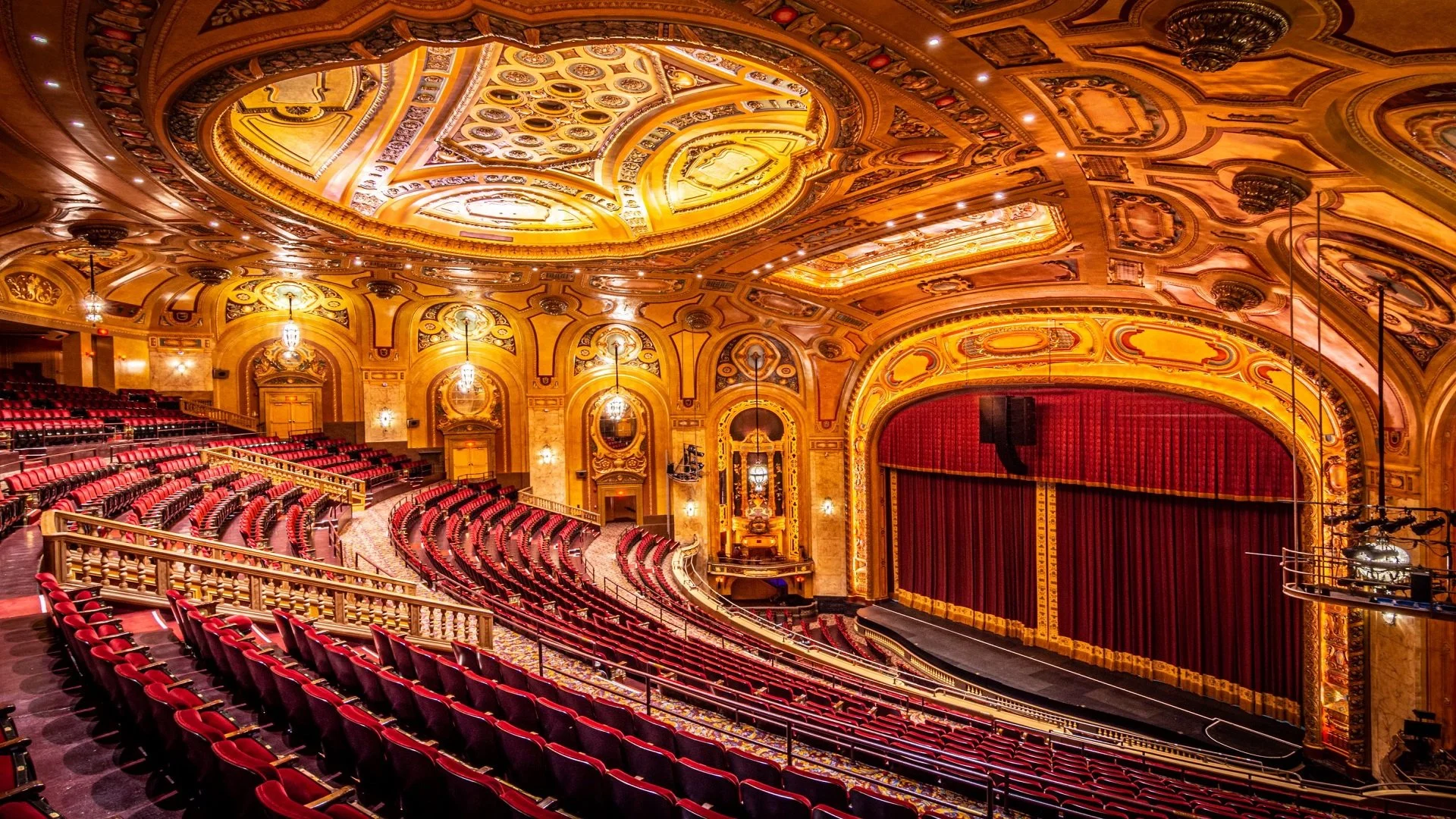
Shea’s Performing Arts Center
Director of Marketing & Communications Corporate Leadership Experience
When the Org Chart Becomes Part of the Marketing Strategy
❋ The ChallengeShea’s Performing Arts Center was more than a single theatre. It was a growing performing arts institution encompassing touring Broadway productions, regional and local theatre, institutional programming, and an emerging restaurant concept.
Yet the marketing department was structured largely as a shared function supporting these distinct lines of business.
When I joined under new organizational leadership, I inherited a three-person team responsible for marketing across the portfolio. Each venue had different audiences, programming, revenue considerations, and growth opportunities, but the organizational structure and marketing approach had not been sufficiently differentiated to reflect those realities.
The immediate challenge appeared to be one of capacity: a small team supporting an increasingly complex institution.
But adding resources along would not address the underlying issue.
❋ The TransformationThe marketing department evolved from a relatively small shared-service team into a more structured function with clearer ownership, specialized capabilities, and a strategic foundation for supporting multiple businesses.
The expanded team created capacity, but the more significant change was how that capacity was organized.
Dedicated responsibility allowed greater attention to the distinct needs of each venue. In-house design improved the department’s ability to respond to creative demands, while public relations expertise strengthened institutional communications.
The brand strategy work also provided a more deliberate foundation for messaging, audience engagement, and marketing decisions across the portfolio.
As a member of the senior leadership team, I contributed to broader institutional initiatives, including patron research, strategic vendor discussions, and mission, vision, and values work.
The result was a marketing function better aligned with the complexity and ambitions of the organization it supported.
❋ The SignalThe organization wasn’t simply managing multiple marketing priorities. It was managing multiple businesses under one institutional umbrella.
Each needed to benefit from the credibility and recognition of Shea’s while developing its own positioning, audience understanding, and communication approach.
The existing shared-service model made it difficult to establish the degree of strategic ownership each business required.
I recognized that the department’s structure, the institution’s brand architecture, and its business priorities needed to be considered together.
Before determining how many people the team needed, we had to determine how the organization should approach marketing each part of its portfolio.
The problem wasn’t simply the size of the marketing team. It was how that team was organized around the businesses it served.
❋ The Strategic ResponseI approached the challenge much as I would a portfolio of consumer brands: one overarching institutional identity with distinct businesses operating beneath it.
That perspective informed two interconnected initiatives.
First, restructuring the marketing organization.
I reorganized responsibilities to create clearer ownership across the portfolio.
Rather than expecting every marketing professional to support every venue in the same way, we established more dedicated accountability for individual lines of business.
This included focused marketing leadership for the flagship Broadway programming and Shea’s 710 Theatre, with shared support for smaller programming needs.
I also expanded the team from three to six, introducing dedicated public relations expertise and bringing graphic design capabilities in-house to increase responsiveness and support the volume of creative work required.
Second, establishing a differentiated brand strategy.
I led the team through a portfolio brand strategy process that considered both the overarching Shea’s identity and the distinct positioning needs of its individual venues.
We developed clearer audience profiles and personas, considered the motivations and expectations of different patron groups, and established differentiated communication approaches appropriate to each business.
The objective was to ensure that every venue benefited from the strength of the institution without losing the ability to connect meaningfully with its own audience.
Together, these initiatives connected organizational design with brand strategy and execution.
❋ The Evidence3 → 6: Restructured and expanded the marketing team, introducing clearer portfolio ownership and specialized capabilities.
Approximately $20M: Annual touring Broadway sales supported by the marketing function.
+18%: Increase in average individual-show sales at Shea’s 710 Theatre.
+97%: Increase in email-generated revenue across managed programs.
Portfolio brand architecture: Developed differentiated positioning, audience personas, and communication approaches for multiple venues under the Shea’s umbrella.
Executive leadership: Served on the senior leadership team and contributed to institution-wide strategic initiatives.
❋ The Alchemy PrincipleYour org chart is part of your marketing strategy.
Marketing performance isn’t determined solely by campaigns, channels, or creative execution. It is also shaped by how an organization assigns responsibility, develops expertise, allocates resources, and aligns its people around business priorities.
When the structure and strategy reinforce one another, teams are better positioned to deliver meaningful results.
What began as a need to strengthen a marketing department became an opportunity to reconsider how an entire portfolio of distinct businesses was supported. The transformation wasn’t simply about adding people or redistributing responsibilities. It was about creating the organizational structure, strategic clarity, and differentiated brand identities necessary for each business to grow within a shared institution.
The lesson extended well beyond performing arts: meaningful growth requires alignment between what an organization is trying to accomplish and how it is built to accomplish it.